Sample ride · synthetic demo
This is a hand-authored product preview, not real analysis output. Pose overlays, observations, and scores are seeded. Upload your own video to run the real orchestrator pipeline.
Back to library
EquitationLesson Evaluation
Lesson Evaluation — Bee
Driftwoods Bellanca · May 13, 2026 · 38:12 · Outdoor sand — Sovereignty Equestrian, Kelowna
86
Overall
86
vs baseline 80▲+6
Primary driver: Hands
86
Rider
86
vs baseline 80▲+6
Primary driver: Hands
83
Horse
83
vs baseline 77▲+6
Primary driver: Technique
85
Partnership
85
vs baseline 79▲+6
Primary driver: Harmony
30
Confidence
0.30
Low
Based on 2 frames
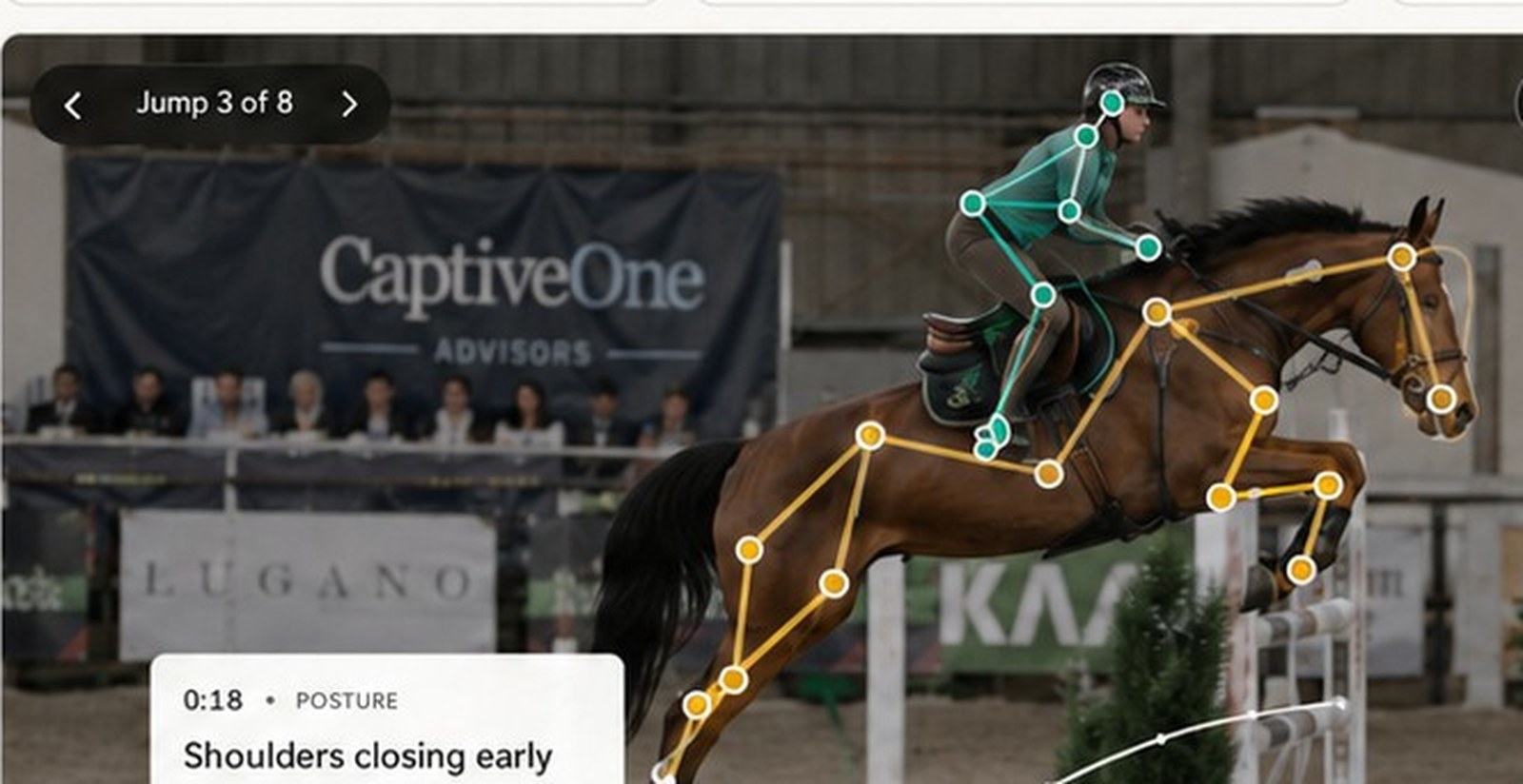
1:55 · Transition
Downward transition leaning
Paused
1:55 / 38:12
Event timeline
PostureBalanceRhythmJumpTransitionSafetyImprovement
Rider review
Posture, seat, hands, leg, balance, timing, consistency. Scored against USEF Equitation 0–100.
Sub-scores
avg 86/100
Posture
88/100
Seat
89/100
Hands
90/100
Leg
84/100
Balance
81/100
Timing
85/100
Consistency
83/100
1:55·TRANSITION
LowDownward transition leaning
Evidence
- ·22° forward lean during downward transition
- ·Slight forward lean during canter-trot transition at A.
Why it matters
Upper body tipping forward during downward transitions teaches the horse to fall on the forehand.
Fix cue
Sit tall and use core engagement to half-halt rather than rein pressure.
Actual1:55
Upper body tipping
Ideal reference1:55
Sternum tall
ΔTrunk leaning 22° from vertical during transition; ideal under 12°.
Frame compare · actual vs ideal
1:55
MetricActualIdeal
Trunk lean from vertical (landing)22 °4–12 °
All rider observations